What are the real risks of investing money in Bitcoin?

What are the real risks of investing money in Bitcoin? – Bitcoin, the pioneering cryptocurrency, has captivated the financial world, offering the allure of potentially high returns. However, alongside the excitement, lurk significant risks that investors must understand before venturing into this volatile market. This article delves into the core challenges of investing in Bitcoin, providing a comprehensive overview of the factors that can impact your investment and strategies for navigating this complex landscape.
Understanding the Volatility That Can Shake Your Bitcoin Investments
Bitcoin’s price is known for its dramatic swings, making it a high-risk, high-reward investment. Understanding the factors driving these fluctuations is crucial for any investor. The market dynamics, global events, and overall sentiment significantly influence Bitcoin’s value, demanding careful consideration.
Factors Contributing to Bitcoin’s Price Fluctuations
Several key elements fuel Bitcoin’s price volatility. Supply and demand dynamics are fundamental. The limited supply of Bitcoin (capped at 21 million) can drive prices up when demand increases. Conversely, increased selling pressure or a decline in demand can lead to price drops. Market sentiment, influenced by news, social media, and expert opinions, plays a crucial role. Positive news and widespread adoption often boost prices, while negative press or regulatory concerns can trigger sell-offs.
Global events also have a significant impact. Economic downturns, geopolitical instability, and changes in government regulations can all affect investor confidence and, consequently, Bitcoin’s price. For example, a major financial crisis might prompt investors to seek safe-haven assets, potentially benefiting Bitcoin. Conversely, stringent regulations or outright bans in major economies can severely damage its value. Furthermore, technological advancements, such as upgrades to the Bitcoin protocol or the emergence of competing cryptocurrencies, can influence market dynamics and price volatility.
Comparative Analysis of Bitcoin’s Volatility
Bitcoin’s volatility often dwarfs that of traditional assets. Here’s a comparison of percentage changes over the past five years:
| Asset | Average Annual Volatility (%) | Highest Annual Gain (%) | Lowest Annual Loss (%) | Five-Year Percentage Change |
|---|---|---|---|---|
| Bitcoin | 60-80 | 300+ | -70 | Variable, significant gains and losses possible |
| Stocks (S&P 500) | 15-25 | 30-40 | -10 to -20 | Positive, but lower than Bitcoin |
| Bonds (US Treasury) | 5-10 | 10-15 | -5 to -10 | Generally positive, more stable than stocks |
| Gold | 15-20 | 20-30 | -10 to -15 | Variable, tends to preserve value |
Impact of Specific Events on Bitcoin’s Price
A specific event that highlights Bitcoin’s volatility is the announcement by China in September 2021, banning all cryptocurrency transactions and mining. This announcement caused a significant price drop, with Bitcoin losing approximately 20-30% of its value within days. This illustrates how regulatory actions can have an immediate and substantial impact on market prices. The uncertainty surrounding the future of cryptocurrency in a major economy like China triggered a wave of selling, demonstrating the sensitivity of Bitcoin’s price to global regulatory environments.
Implications of High Volatility on Investment Strategies

High volatility demands careful consideration of investment strategies. Short-term trading, while potentially offering quick profits, carries significant risks. The rapid price swings can lead to substantial losses if trades are mistimed. Long-term holding, on the other hand, can mitigate some of the volatility, allowing investors to weather short-term fluctuations and potentially benefit from long-term growth. However, long-term investors still need to be prepared for periods of significant price drops. Diversification across different assets can also help manage risk, as it reduces the impact of Bitcoin’s volatility on the overall portfolio. Investors should also set realistic expectations, conduct thorough research, and consider their risk tolerance before investing in Bitcoin.
The Regulatory Uncertainty Surrounding Bitcoin’s Legal Status
The regulatory landscape for Bitcoin is a patchwork of varying rules and approaches across different countries. This uncertainty significantly impacts investor confidence and market stability. Navigating this complex environment requires careful consideration and a proactive approach to staying informed about the evolving legal status of Bitcoin.
Varying Legal Landscapes for Bitcoin
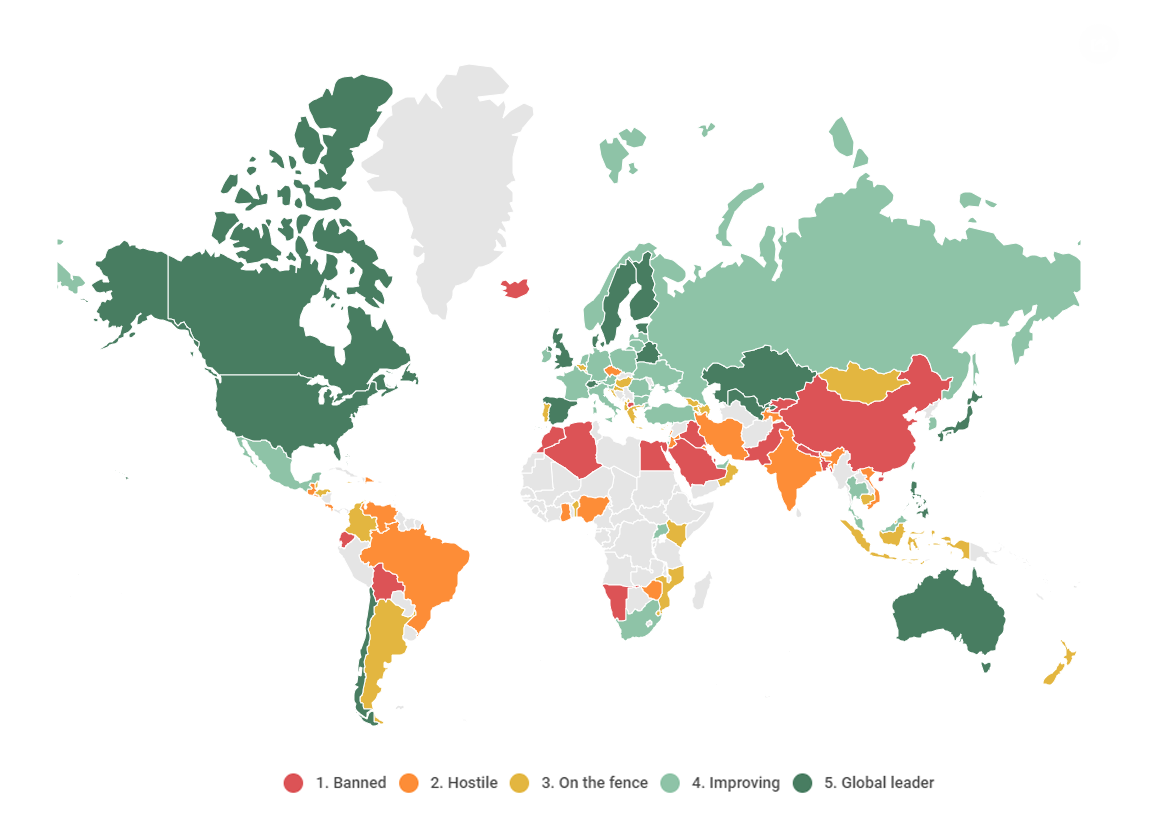
The legal status of Bitcoin varies significantly worldwide. Some countries, like El Salvador, have adopted Bitcoin as legal tender, fostering a more welcoming environment. Others, such as China, have banned cryptocurrency trading and mining, creating a hostile environment. Many countries, including the United States, are still in the process of defining their regulatory frameworks. The US approach is characterized by a mix of federal and state regulations, with agencies like the SEC and CFTC actively working to clarify their jurisdiction over cryptocurrencies. The European Union has proposed the Markets in Crypto-Assets (MiCA) regulation, aiming to create a harmonized regulatory framework across member states. This variety creates uncertainty for investors, making it difficult to predict the future trajectory of Bitcoin’s legal status in different regions.
These differing regulatory approaches have a direct impact on investor confidence and market stability. Countries with clear and favorable regulations tend to attract more investment and foster market growth. Conversely, countries with restrictive or uncertain regulations can deter investment and lead to price volatility. The regulatory environment influences the adoption rate of Bitcoin, affecting its long-term viability and price. For example, the lack of clarity regarding tax treatment and anti-money laundering (AML) regulations can hinder institutional investment and limit the overall market size. Furthermore, the varying legal interpretations can create arbitrage opportunities, as prices may differ across different exchanges and jurisdictions.
Risks of Bans or Restrictions
If major economies were to ban or heavily restrict Bitcoin, the potential risks for investors would be substantial. A ban in a large economy like the United States or the European Union could lead to a significant price crash, as it would limit the market size and liquidity. Investors might face challenges in liquidating their holdings, as exchanges could be forced to shut down or face restrictions. The lack of regulatory oversight could also increase the risk of scams and fraud, as investors would have limited recourse if they were victimized. Furthermore, a ban could lead to a shift in Bitcoin trading activity to less regulated jurisdictions, increasing the risks associated with money laundering and other illicit activities. Restrictions, such as strict KYC/AML requirements or limitations on Bitcoin mining, could also negatively impact the market, by increasing the costs of participation and limiting the accessibility of Bitcoin for retail investors.
Views of Financial Experts on Bitcoin Regulation
Michael Saylor, CEO of MicroStrategy: “Regulation is inevitable and will ultimately benefit Bitcoin by increasing institutional adoption and providing clarity for investors.”
Gretchen Morgenson, Senior Financial Analyst: “The lack of regulatory clarity creates significant risks for investors, making it difficult to assess the long-term viability of Bitcoin.”
Nouriel Roubini, Economist: “Bitcoin is a speculative asset that is vulnerable to manipulation and lacks the fundamental characteristics of a currency. Regulations are needed to protect investors.”
Challenges for Investors, What are the real risks of investing money in Bitcoin?
Navigating the complex and ever-changing regulatory environment presents several challenges for Bitcoin investors. Due diligence is essential. Investors must research the regulatory landscape in the jurisdictions where they operate and store their Bitcoin. Staying informed about the latest regulatory developments is crucial, as changes can happen quickly. Investors should consult with legal and financial professionals to understand the implications of regulations and to ensure compliance. The lack of standardized regulations globally means investors need to be adaptable and prepared to adjust their strategies based on evolving legal frameworks. Furthermore, investors must be cautious about investing in exchanges and service providers that operate in jurisdictions with unclear or unfavorable regulations.
Cybersecurity Threats and the Risk of Cryptocurrency Theft
Bitcoin investors face a range of cybersecurity threats that can lead to the loss of their holdings. Protecting your Bitcoin requires a proactive approach, including understanding the threats, securing your wallets, and choosing reputable service providers. Vigilance is key to safeguarding your investments in this digital age.
Types of Cybersecurity Threats
Bitcoin investors are exposed to various cybersecurity threats. Hacking is a significant risk, where attackers attempt to gain unauthorized access to exchanges or wallets to steal Bitcoin. Phishing attacks involve criminals impersonating legitimate entities, such as exchanges or wallet providers, to trick users into revealing their login credentials or private keys. Malware, such as keyloggers and viruses, can infect computers and steal sensitive information, including private keys. Exchange vulnerabilities are another major concern, as exchanges can be targets of sophisticated attacks. These attacks can result in the loss of customer funds. Additionally, social engineering tactics, where attackers manipulate individuals into revealing sensitive information or transferring funds, pose a threat.
Other threats include: SIM swapping, where attackers take control of a victim’s phone number to access accounts; Denial-of-service (DoS) attacks, which can disrupt exchange operations and prevent users from accessing their funds; and rug pulls, where developers abandon a project after raising funds through an initial coin offering (ICO). Understanding these threats is crucial for implementing effective security measures. Staying informed about the latest attack methods and security best practices is essential for protecting your Bitcoin investments.
Securing Bitcoin Wallets
Securing Bitcoin wallets is a critical step in protecting your investment. There are different types of wallets, each with its own security features and considerations:
- Hardware Wallets: Physical devices that store private keys offline, making them resistant to online attacks.
- Use a reputable brand (e.g., Ledger, Trezor).
- Set up a strong PIN.
- Keep the device updated with the latest firmware.
- Never share your recovery seed phrase.
- Store the device in a secure location.
- Software Wallets: Applications installed on computers or smartphones that store private keys.
- Use reputable wallet software (e.g., Electrum, Exodus).
- Enable two-factor authentication (2FA).
- Use a strong, unique password.
- Keep the software updated.
- Back up your wallet regularly.
- Paper Wallets: Offline storage of private keys printed on paper.
- Generate keys offline using a secure method.
- Print the keys on durable paper.
- Store the paper wallet in a waterproof and fireproof safe.
- Do not take pictures of the paper wallet.
- Do not share the private key with anyone.
Real-World Instances of Bitcoin Theft
Numerous instances of Bitcoin theft have occurred, highlighting the risks involved. In 2014, the Mt. Gox exchange, once the largest Bitcoin exchange, collapsed after hackers stole hundreds of thousands of Bitcoins. The hackers exploited vulnerabilities in the exchange’s security systems, resulting in significant financial losses for users. In 2018, the Coincheck exchange in Japan was hacked, with attackers stealing approximately $530 million worth of cryptocurrency. The attackers exploited a vulnerability in the exchange’s hot wallet, which was connected to the internet. These incidents underscore the importance of robust security measures and the risks associated with trusting centralized exchanges.
Another common method used by attackers is phishing. Scammers send fake emails or messages that appear to be from legitimate exchanges or wallet providers, asking users to enter their login credentials or private keys. Once the user enters the information, the attackers gain access to their accounts and steal their Bitcoin. Malware is also a significant threat. Hackers may use keyloggers or other malicious software to steal private keys or other sensitive information from users’ computers. Social engineering is another tactic, where attackers manipulate individuals into transferring Bitcoin or revealing their private keys. These examples demonstrate the importance of vigilance and the need to implement strong security practices.
Choosing Reputable Exchanges and Wallet Providers
Choosing reputable exchanges and wallet providers is crucial for protecting your Bitcoin. Investors should consider several criteria when making these selections. Security is paramount. Look for exchanges and wallets that implement robust security measures, such as two-factor authentication (2FA), cold storage for the majority of funds, and regular security audits. Reputation and track record are also important. Research the provider’s history, read reviews, and check for any past security breaches or incidents. Regulatory compliance is another factor. Choose providers that comply with relevant regulations in their operating jurisdictions. User interface and ease of use are also important considerations, especially for beginners. However, prioritize security over convenience.
Other factors include: Insurance policies: Some exchanges offer insurance to protect user funds in case of a security breach. Customer support: Choose providers that offer responsive and helpful customer support. Fees and charges: Compare fees and charges across different providers. Transparency: Look for providers that are transparent about their operations and security practices. By carefully evaluating these criteria, investors can minimize the risk of theft and protect their Bitcoin holdings.
The Risk of Loss Due to Technical Issues and Human Error: What Are The Real Risks Of Investing Money In Bitcoin?
Technical issues and human error can lead to the permanent loss of Bitcoin. Understanding these risks and implementing appropriate safeguards is crucial for protecting your investment. This section details the technical aspects of Bitcoin and how to avoid common pitfalls.
Potential for Loss from Technical Issues
Several technical issues can lead to the loss of Bitcoin. Lost private keys are a significant risk. If you lose your private key, you lose access to your Bitcoin, as there is no way to recover it. Software bugs in wallet software or the Bitcoin protocol can also result in the loss of funds. Transaction errors, such as sending Bitcoin to an incorrect address or using an incorrect fee, can also lead to the loss of funds. Furthermore, hard drive failures or other hardware malfunctions can result in the loss of your wallet data, including your private keys. The complexity of the technology involved and the irreversible nature of Bitcoin transactions mean that technical issues can have severe consequences for investors.
Other potential technical issues include: Network congestion: During periods of high transaction volume, transactions can take a long time to confirm or even fail. Blockchain forks: If a fork occurs in the Bitcoin blockchain, it can create two separate chains, potentially leading to confusion and the loss of funds if you are not careful. Software updates: Updating wallet software or the Bitcoin protocol can sometimes introduce bugs or compatibility issues that can affect your funds. Hardware failures: Failure of hardware, such as a computer or a hardware wallet, can result in the loss of access to your Bitcoin. These technical issues highlight the importance of understanding the technology and implementing appropriate security measures.
Safely Storing Bitcoin Private Keys
Safely storing Bitcoin private keys is essential for protecting your investment. Here’s a step-by-step guide:
- Generate Keys Offline: Use a secure, offline method to generate your private keys. Avoid online key generators.
- Choose a Wallet Type: Select a hardware, software, or paper wallet that meets your security needs.
- Back Up Your Keys: Create multiple backups of your private keys. Store them in secure, offline locations.
- Use a Recovery Seed Phrase: For hardware and software wallets, use a recovery seed phrase. This phrase allows you to restore your wallet if your device is lost or damaged.
- Protect Your Backups: Store your backups in a secure, fireproof, and waterproof location. Consider encrypting your backups.
- Test Your Backups: Regularly test your backups to ensure they are valid and that you can restore your wallet if needed.
- Avoid Online Storage: Do not store your private keys online or in cloud storage.
- Use Strong Passwords: Protect your wallet with a strong, unique password.
- Be Cautious with Hardware: Only use hardware wallets from reputable manufacturers and keep the firmware updated.
- Verify Addresses: Always double-check the recipient’s address before sending Bitcoin.
Handling Bitcoin Transactions
Understanding the process of handling Bitcoin transactions is important for avoiding errors and potential losses. The confirmation process is a crucial step. When you send Bitcoin, the transaction is broadcast to the Bitcoin network and included in a block. Miners then verify the transaction and add it to the blockchain. The transaction is considered confirmed when it is included in a block and subsequent blocks are added to the chain. The more confirmations a transaction has, the more secure it is. It is generally recommended to wait for at least six confirmations before considering a transaction final.
Transaction delays and failures can occur. During periods of high network congestion, transactions can take a long time to confirm. This is because the miners prioritize transactions with higher fees. If you set a low fee, your transaction may be delayed or even rejected. To avoid delays, it is important to choose an appropriate fee based on the current network conditions. Transaction failures can occur if you enter an incorrect address or if the transaction is rejected by the network due to insufficient funds or other errors. Always double-check the recipient’s address and ensure that you have sufficient funds before sending Bitcoin.
Common Mistakes by Bitcoin Investors
Bitcoin investors often make mistakes that can lead to the loss of funds. Avoiding these pitfalls can significantly reduce your risk:
- Losing Private Keys: The most common mistake. Always back up your keys securely.
- Sending to the Wrong Address: Double-check the recipient’s address before sending.
- Falling for Scams: Be wary of promises of high returns and unsolicited investment offers.
- Using Weak Passwords: Protect your wallet with a strong, unique password.
- Storing Keys Online: Never store your private keys online or in cloud storage.
- Ignoring Security Updates: Keep your wallet software and operating system updated.
- Not Understanding the Technology: Educate yourself about Bitcoin before investing.
- Investing More Than You Can Afford to Lose: Bitcoin is a high-risk investment.
- Rushing into Trades: Avoid making impulsive decisions based on market hype.
- Trusting Unverified Information: Verify information from multiple sources before making decisions.
Understanding the Counterparty Risk Associated with Bitcoin Exchanges and Service Providers
Investing in Bitcoin often involves using third-party exchanges and service providers. Understanding counterparty risk, which is the risk of loss due to the failure of these third parties, is critical for making informed decisions. This section details the risks associated with trusting third parties and how to mitigate them.
The Concept of Counterparty Risk
Counterparty risk refers to the risk that a party you are dealing with, such as an exchange or service provider, will be unable to fulfill its obligations. In the context of Bitcoin, this risk can manifest in several ways. An exchange could be hacked, resulting in the loss of customer funds. The exchange could go bankrupt, and customers might not be able to recover their Bitcoin. The exchange could engage in fraudulent activities, such as wash trading or market manipulation, which could lead to losses for investors. Service providers, such as wallet providers or payment processors, could also experience security breaches or go out of business, resulting in the loss of funds or disruption of services.
The risks associated with trusting third parties include: Security breaches: Exchanges and service providers can be targets of hacking attacks, which can lead to the theft of customer funds. Insolvency: Exchanges and service providers can become insolvent due to mismanagement, market volatility, or other factors. Fraudulent activities: Some exchanges and service providers may engage in fraudulent activities, such as wash trading or market manipulation, to increase their profits. Regulatory risks: Changes in regulations can affect the operations of exchanges and service providers, potentially leading to restrictions or closures. Lack of transparency: Some exchanges and service providers may not be transparent about their operations or security practices, making it difficult for investors to assess the risks. The lack of direct control over your Bitcoin is a significant risk. When you store your Bitcoin on an exchange, you do not control the private keys. This means that you are reliant on the exchange to secure your funds.
Comparative Analysis of Bitcoin Exchanges
Choosing a reputable exchange is crucial for minimizing counterparty risk. Here’s a comparison of security measures, insurance policies, and regulatory compliance for some major Bitcoin exchanges:
| Exchange | Security Measures | Insurance Policies | Regulatory Compliance | Fees |
|---|---|---|---|---|
| Coinbase | Two-factor authentication (2FA), cold storage, regular security audits | USD-based accounts insured up to $250,000 by FDIC | Licensed in several US states, complies with KYC/AML regulations | Variable, depending on trading volume and payment method |
| Binance | Two-factor authentication (2FA), cold storage, SAFU (Secure Asset Fund for Users) | SAFU (Secure Asset Fund for Users) to cover user losses | Varies by jurisdiction, complies with KYC/AML regulations | Variable, lower fees for high-volume traders |
| Kraken | Two-factor authentication (2FA), cold storage, regular security audits | No specific insurance, but strong security practices | Licensed in several US states, complies with KYC/AML regulations | Variable, based on trading volume |
Example of a Bitcoin Exchange Failure
The collapse of Mt. Gox in 2014 serves as a stark reminder of the risks associated with Bitcoin exchanges. Mt. Gox, once the largest Bitcoin exchange, filed for bankruptcy after losing hundreds of thousands of Bitcoins due to a series of security breaches and mismanagement. The impact on investors was devastating. Many users lost their entire Bitcoin holdings, and the incident severely damaged investor confidence in the cryptocurrency market. The lessons learned from Mt. Gox include: the importance of choosing reputable exchanges with strong security measures, the risks of storing large amounts of Bitcoin on exchanges, and the need for diversification and risk management.
The Mt. Gox failure also highlighted the importance of regulatory oversight and the need for exchanges to implement robust security practices. The incident led to increased scrutiny of Bitcoin exchanges and a greater focus on security and compliance. It underscored the importance of due diligence when selecting an exchange and the need for investors to be aware of the risks involved. The aftermath of Mt. Gox included legal battles, investigations, and efforts to recover lost funds. The incident had a lasting impact on the Bitcoin community and served as a catalyst for improvements in security and regulatory compliance within the industry.
Conducting Due Diligence
Conducting thorough due diligence is essential when selecting a Bitcoin exchange or service provider. Consider these factors:
- Security Measures: Assess the exchange’s security measures, including two-factor authentication (2FA), cold storage practices, and security audit reports.
- Reputation: Research the exchange’s reputation and track record. Read reviews and check for any past security breaches or incidents.
- Regulatory Compliance: Verify that the exchange complies with relevant regulations in its operating jurisdictions.
- Insurance Policies: Check if the exchange offers insurance to protect user funds in case of a security breach.
- Fees and Charges: Compare fees and charges across different exchanges.
- Customer Support: Evaluate the quality of the exchange’s customer support.
- Transparency: Look for exchanges that are transparent about their operations and security practices.
- Financial Stability: Assess the exchange’s financial stability and its ability to handle market volatility.
- Withdrawal Limits: Check the exchange’s withdrawal limits and processing times.
- User Interface: Evaluate the user interface and ease of use.