What are the primary factors influencing Bitcoin price fluctuations?
What are the primary factors influencing Bitcoin price fluctuations? – Bitcoin’s price, like that of any asset, is a dynamic reflection of numerous interconnected factors. Understanding these influences is crucial for anyone looking to navigate the cryptocurrency market. This article breaks down the key elements that drive Bitcoin’s price movements, offering insights into the complex interplay of supply and demand, global economic trends, institutional investment, technological advancements, and market sentiment.
Let’s dive in.
Understanding the Impact of Supply and Demand Dynamics on Bitcoin’s Valuation
The fundamental principles of supply and demand are at the heart of Bitcoin’s price fluctuations. Scarcity, coupled with increasing demand, is a primary driver of value in the cryptocurrency market. This section delves into the mechanics of these forces and their impact on Bitcoin’s price trajectory.
Core Principles of Supply and Demand in Bitcoin
Bitcoin’s value is significantly influenced by its limited supply. Unlike fiat currencies that can be printed at will, Bitcoin has a hard cap of 21 million coins. This scarcity, programmed into the Bitcoin protocol, is a key factor in its valuation. As demand increases, the limited supply intensifies the pressure on prices, potentially leading to significant gains. Conversely, if demand stagnates or decreases, the price may experience a decline.
The rate at which new Bitcoins enter circulation also plays a crucial role. The process of “mining” new Bitcoins is designed to slow down over time, with the reward for mining a block of transactions halving approximately every four years. This mechanism, known as the “halving,” directly impacts the supply side of the equation.
Impact of Halving Events on Bitcoin’s Supply and Price
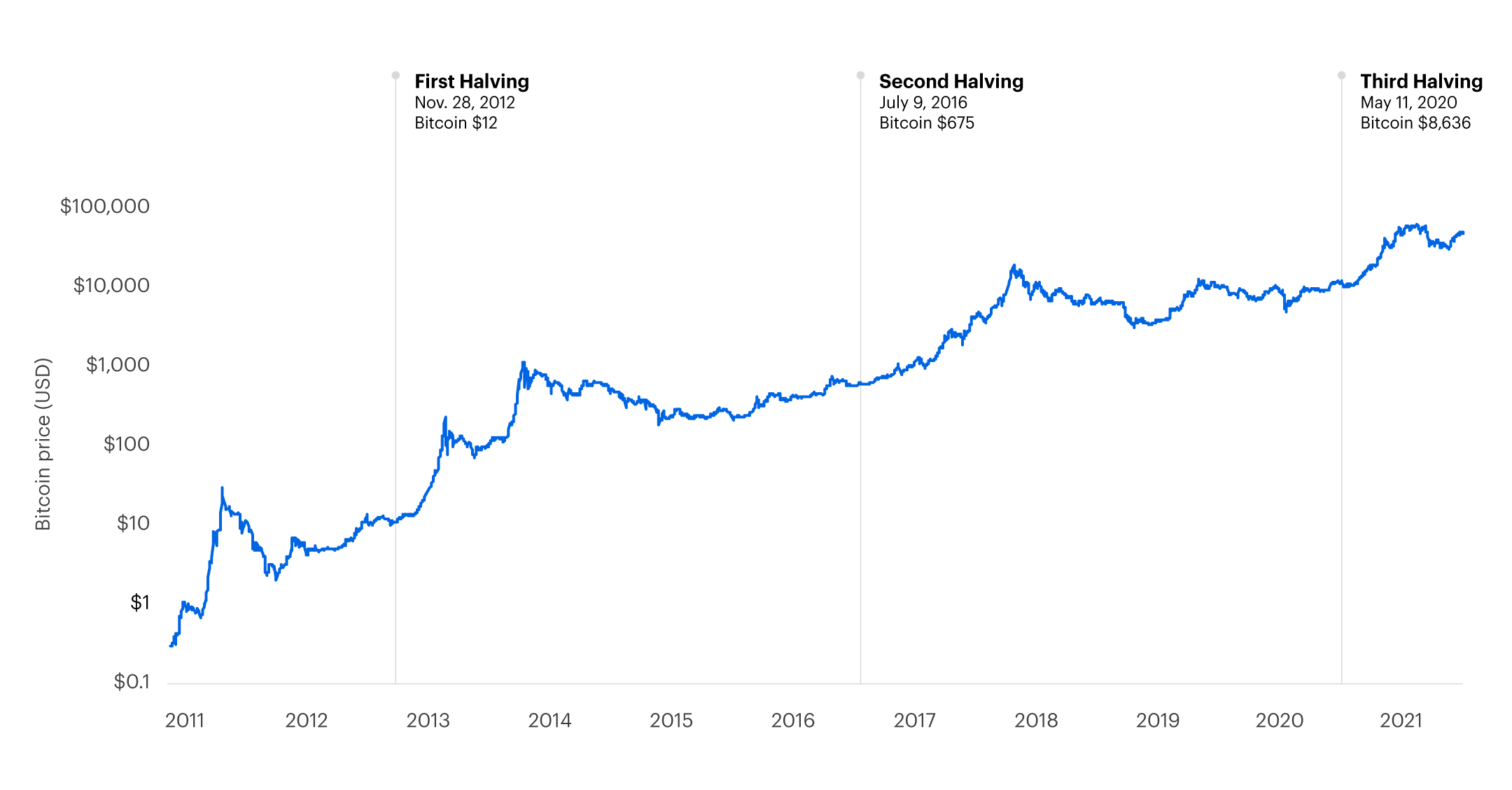
Halving events are pivotal in Bitcoin’s price history. They reduce the rate at which new Bitcoins are created, thereby decreasing the supply entering the market. Historically, these events have been followed by significant price increases, as the reduced supply meets sustained or growing demand. The anticipation of a halving often fuels speculation and investment, further driving up prices.
For example, the first halving in 2012 saw the block reward drop from 50 BTC to 25 BTC. This was followed by a substantial price increase. Similar patterns were observed after the 2016 and 2020 halvings. The 2024 halving is expected to have similar effects, although the market’s maturity and the entry of institutional investors may influence the price dynamics differently compared to previous cycles.
Relationship Between Bitcoin’s Circulating Supply, Demand, and Price Fluctuations
Here’s a simplified view of how these factors interact. Remember, these are broad generalizations and don’t account for all market nuances.
| Period | Circulating Supply | Demand | Price Fluctuation |
|---|---|---|---|
| Pre-Halving | Increasing (New coins entering the market at a higher rate) | Variable (influenced by market sentiment, adoption rates) | Often a period of price consolidation or moderate growth. |
| Post-Halving (Short Term) | Decreasing (New coins entering the market at a reduced rate) | Potentially Increasing (Due to anticipation and speculation) | Price often rises initially due to reduced supply. |
| Post-Halving (Medium Term) | Relatively Stable (New supply is small compared to existing supply) | Variable (Influenced by wider adoption, institutional interest) | Price movements become more sensitive to broader market trends and adoption. |
| Long-Term | Very Slow Growth (Due to the fixed supply cap) | Increasing (If adoption continues) | Potential for significant price appreciation, driven by scarcity. |
Significant Events That Altered Bitcoin’s Supply and Demand
Several events have dramatically shifted Bitcoin’s supply and demand dynamics. For instance, the 2017 bull run was fueled by increased retail interest and media coverage, driving up demand. The 2020-2021 bull run saw institutional investors entering the market, adding significant buying pressure. Conversely, regulatory crackdowns in countries like China have reduced demand, leading to price corrections.
Another example is the increasing adoption of Bitcoin as legal tender in El Salvador. This move increased demand from the country’s population and also signaled to the rest of the world that Bitcoin has the potential to become a widely accepted currency.
Examining the Influence of Global Economic Trends on Bitcoin’s Price
Bitcoin’s price is not isolated from the broader economic landscape. Macroeconomic indicators, geopolitical events, and regulatory changes all play a role in shaping investor sentiment and, consequently, Bitcoin’s valuation. Understanding these relationships is critical for anticipating market movements.
Bitcoin’s Price and Macroeconomic Indicators
Bitcoin’s performance is often correlated with, and sometimes inversely correlated with, macroeconomic indicators. For example, during periods of high inflation, investors may turn to Bitcoin as a hedge against the declining value of fiat currencies. The fixed supply of Bitcoin makes it attractive to investors seeking to preserve their purchasing power.
Interest rates also influence Bitcoin’s price. Higher interest rates can make traditional assets like bonds more appealing, potentially diverting investment away from Bitcoin. Conversely, low-interest-rate environments may encourage investors to seek higher returns in riskier assets, including Bitcoin.
GDP growth can indirectly affect Bitcoin. Strong economic growth typically leads to increased investment and risk appetite, which could benefit Bitcoin. However, economic downturns can also drive investment into Bitcoin as a safe haven asset, particularly in times of uncertainty.
Impact of Geopolitical Events and Regulatory Changes
Geopolitical events and regulatory changes can significantly impact Bitcoin’s adoption and price. For example, political instability or economic crises in certain countries can drive citizens to seek alternative stores of value, such as Bitcoin. The cryptocurrency’s decentralized nature makes it resistant to government control, making it an attractive option in such scenarios.
Regulatory decisions, such as the classification of Bitcoin as a commodity or a security, can also have a profound impact. Clear and favorable regulations can attract institutional investors and boost market confidence, while restrictive regulations can stifle adoption and decrease prices. The regulatory landscape is constantly evolving, and staying informed about these changes is crucial.
Investor Sentiment and Bitcoin Price Volatility
Investor sentiment, heavily influenced by economic trends, is a significant driver of Bitcoin price volatility. Positive economic news and bullish market sentiment can lead to increased investment and price appreciation, while negative news and bearish sentiment can trigger sell-offs and price declines.
- Positive Impacts:
- Increased institutional investment due to favorable regulatory environments.
- Growing adoption by mainstream companies and payment processors.
- Positive media coverage and increased public awareness.
- Negative Impacts:
- Regulatory crackdowns and restrictions on cryptocurrency trading.
- Economic downturns and decreased risk appetite.
- Negative media coverage and public skepticism.
The US Dollar’s Influence on Bitcoin’s Price
The strength or weakness of the US dollar (USD) relative to other currencies has a notable influence on Bitcoin’s price. When the dollar weakens, investors may seek alternative assets, including Bitcoin, as a hedge against inflation and currency devaluation. This can lead to increased demand for Bitcoin and, consequently, a higher price.
Conversely, a strong dollar can make Bitcoin less attractive to international investors, as it becomes more expensive to purchase with other currencies. This can lead to decreased demand and lower prices. The relationship is complex and influenced by global economic conditions and investor risk appetite.
Analyzing the Role of Institutional Investment and Adoption in Shaping Bitcoin’s Price
Institutional investment plays a critical role in the maturation of the Bitcoin market. The involvement of hedge funds, corporations, and other large entities brings significant capital and credibility to the cryptocurrency, influencing price discovery and long-term growth.
How Institutional Investment Influences Bitcoin’s Price
Institutional investors, including hedge funds, corporations, and ETFs, significantly influence Bitcoin’s price through their trading strategies and investment decisions. Large-scale buying or selling by these entities can have a substantial impact on market liquidity and price movements. Their entry into the market often signals increased legitimacy and acceptance, which can attract further investment from retail and institutional investors alike.
Institutional investors often employ sophisticated trading strategies, such as arbitrage, quantitative trading, and long-term holding strategies. Their involvement adds depth and stability to the market, although their actions can also contribute to volatility in the short term.
Impact of Regulatory Clarity or Uncertainty on Institutional Investment
Regulatory clarity is crucial for attracting institutional investment. Clear and favorable regulations provide a framework for institutions to operate within, reducing legal and compliance risks. This clarity fosters confidence and encourages investment. Conversely, regulatory uncertainty can deter institutional investors, leading to reduced investment and market volatility.
For example, the approval of Bitcoin ETFs in the United States has been a significant catalyst for institutional investment, providing a regulated and accessible way for institutions to gain exposure to Bitcoin. Conversely, regulatory crackdowns in countries like China have led to market sell-offs and reduced institutional participation.
The Effect of Corporate Adoption on the Market
The entry of large corporations into Bitcoin, such as purchasing Bitcoin for their balance sheets, has a profound impact on the market. These actions signal increased confidence in Bitcoin as a store of value and a legitimate asset class. This can attract further investment from both retail and institutional investors, driving up prices and increasing market capitalization.
Corporate adoption also enhances the perception of Bitcoin as a mainstream asset. When well-known companies integrate Bitcoin into their financial strategies, it increases public awareness and acceptance, leading to broader adoption and potentially greater price stability.
Factors Contributing to and Hindering Institutional Adoption
Institutional adoption of Bitcoin is influenced by several factors, both positive and negative.
- Factors Contributing to Adoption:
- Regulatory clarity and favorable tax treatment.
- The availability of regulated investment products (e.g., ETFs).
- Growing infrastructure for custody and trading.
- Increased market liquidity and trading volume.
- Growing acceptance of Bitcoin as a store of value.
- Obstacles Hindering Adoption:
- Regulatory uncertainty and restrictive regulations.
- Concerns about market manipulation and volatility.
- Lack of robust custody solutions.
- Scalability issues and high transaction fees.
- Environmental concerns related to Bitcoin mining.
Investigating the Impact of Technological Advancements and Network Effects on Bitcoin’s Value: What Are The Primary Factors Influencing Bitcoin Price Fluctuations?
Technological advancements and network effects are integral to Bitcoin’s long-term value proposition. Ongoing developments in the Bitcoin protocol and the expansion of its user base contribute to its functionality, security, and overall market position.
Influence of Bitcoin Protocol Upgrades

Upgrades and changes to the Bitcoin protocol have a direct impact on its functionality and price. For example, the Taproot upgrade, implemented in 2021, improved the privacy and efficiency of Bitcoin transactions, making the network more attractive to users. The Lightning Network, a second-layer scaling solution, has significantly enhanced Bitcoin’s scalability by enabling faster and cheaper transactions.
These upgrades demonstrate the continuous development and improvement of the Bitcoin protocol, which is critical for its long-term viability. They also attract developers and users, further strengthening the network effects.
The Role of Network Effects
Network effects are a crucial aspect of Bitcoin’s value proposition. As the user base, transaction volume, and developer activity grow, the value of the network increases exponentially. More users mean more liquidity, greater security, and more utility. A larger developer community leads to faster innovation and more robust infrastructure.
The growth of the Lightning Network is a prime example of network effects in action. As more users adopt the Lightning Network, the network becomes more valuable to each individual user. This virtuous cycle drives further adoption and strengthens the overall Bitcoin ecosystem.
The Potential Impact of Future Technological Innovations
Future technological innovations have the potential to significantly impact Bitcoin’s price. Solutions that improve scalability, such as layer-2 protocols and sharding, could reduce transaction fees and increase transaction throughput, making Bitcoin more accessible and practical for everyday use. Privacy enhancements, such as improved coin mixing techniques and confidential transactions, could increase user privacy and attract a broader user base. These advancements could drive increased adoption and price appreciation.
Competition from Other Cryptocurrencies, What are the primary factors influencing Bitcoin price fluctuations?
Competition from other cryptocurrencies and blockchain platforms affects Bitcoin’s market share and price. Alternative cryptocurrencies, often referred to as “altcoins,” offer different features and functionalities, such as faster transaction speeds, lower fees, or specialized applications. The success of these altcoins can draw investment away from Bitcoin, potentially impacting its market dominance and price.
For example, Ethereum, with its smart contract capabilities, has attracted developers and users interested in decentralized applications (dApps). While Ethereum offers different utility, it also competes for investment capital. The emergence of new technologies and platforms can create both opportunities and challenges for Bitcoin, influencing its market position and price.
Evaluating the Effects of Market Sentiment and Investor Psychology on Bitcoin’s Price
Market sentiment and investor psychology are critical drivers of Bitcoin’s price fluctuations. Emotional biases and the collective psychology of market participants can lead to significant price volatility, creating opportunities and risks for investors.
Emotional Biases and Investor Behavior
Fear, greed, and other emotional biases significantly influence investor behavior in the Bitcoin market. Fear can trigger panic selling during market downturns, leading to sharp price declines. Greed can fuel excessive buying during bull runs, contributing to market bubbles. Other biases, such as herd behavior and the tendency to chase recent gains, can amplify these effects.
Understanding these emotional biases is crucial for navigating the market. Investors who can control their emotions and make rational decisions are better positioned to avoid costly mistakes and capitalize on market opportunities.
The Role of Information and Social Media
Social media, news outlets, and other sources of information play a significant role in shaping investor sentiment and impacting Bitcoin’s price. Positive news, such as increased adoption or regulatory approvals, can boost investor confidence and drive prices up. Negative news, such as regulatory crackdowns or security breaches, can trigger fear and lead to price declines.
Social media platforms and online forums can amplify these effects, as information and opinions spread rapidly. Investors must critically evaluate information from various sources and be aware of potential biases and misinformation.
Market Cycles and Investor Behaviors
Bitcoin’s price movements often follow predictable market cycles, characterized by distinct investor behaviors.
- Bull Runs: Driven by optimism, greed, and FOMO (Fear of Missing Out). Prices rise rapidly, attracting new investors.
- Corrections: Price declines after a period of rapid growth, often triggered by profit-taking or negative news.
- Bear Markets: Characterized by pessimism, fear, and a decline in trading volume. Prices fall steadily.
- Accumulation Phase: A period of consolidation and sideways price movement, often occurring after a bear market, where savvy investors buy Bitcoin at lower prices.
Market Manipulation and Pump-and-Dump Schemes
Market manipulation and pump-and-dump schemes can significantly affect Bitcoin’s price. These schemes involve artificially inflating the price of a cryptocurrency through misleading information or coordinated buying activity, followed by a sell-off to profit at the expense of other investors. This type of activity is illegal and can lead to substantial losses for unsuspecting participants.
The mechanics of pump-and-dump schemes involve several stages:
- Accumulation: Manipulators secretly acquire a large amount of the cryptocurrency.
- Pumping: Spreading positive but often false or misleading information to create hype and attract buyers.
- The Pump: As new buyers enter the market, the price increases rapidly.
- Dumping: Manipulators sell their holdings at the inflated price, profiting from the gains.
- The Dump: The price crashes as other investors realize the scheme and attempt to sell.


